Sun Basket Post #8: Personnel Analysis

Sun Basket’s long-term strategy most certainly includes the specialty diets detailed in last week’s posts. Specifically, the Mediterranean diet is an area of great growth potential for the company. And with a staff level of about 775 employees (Sun Basket’s Competitors, Revenue, Number of Employees, Funding and Acquisitions, 2019), the longevity of the company affects the lives of many people and their families. So, it behooves Sun Basket to take a critical look at its approach to personnel management and engagement.

            Figure 1 shows the areas to which Sun Basket should pay particular attention. Of note are the categories of leadership training, retraining/automation, and attrition. For leadership training, when employees feel more invested in and supported by the place that employs them, they’re more engaged in making the company better. Leadership training not only enhances the overall experience of trained employees and their coworkers, but it’s also an attractive development program that seeds loyalty to the company while being an attractive resume element and source of professional development.
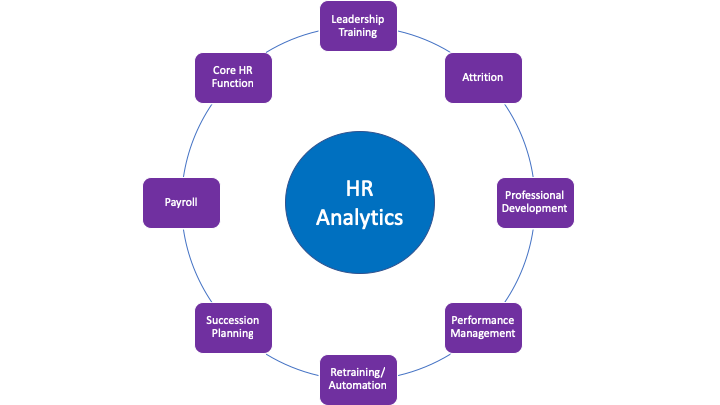
Figure 1. HR Analytics areas of opportunity for development.

            The category of retraining/automation is particularly relevant since the Midwest branch of the company was just shut down since the east and west coasts were determined to provide the required infrastructure to deliver meal kits to 97% of the country without compromising quality (Saxe, 2019). Thankfully, Sun Basket’s CEO appears to be invested in the well-being of the company’s employees. The automation plans for the remaining facilities are not aimed at replacing people but instead aimed at enabling people to focus more on optimizing procedures instead of focusing on producing items. Therefore, a highly skilled workforce can earn more and invest in making the company better. And it appears that the CEO plans to train current employees into those roles, which is much better than laying people off and also taking on the risk of bad press for such a high-profile company.

            And finally, attrition is a related category in which Sun Basket should invest time and resources. It’s expensive to recruit and train new people. It’s much less expensive to retain the people already employed at the company. While substandard employees can still be released through policies and procedures like professional development, the anticipated increased demand as the consumer base grows can better be met when the employees are happy, healthy, and are given all the necessary tools to be productive and engaged members of the company.     

            Post #9 in this series explores an operations analysis.

References

Saxe, L. (2019, June 7). Sun Basket To Close Midwest Plant And Focus On Profitability [Blog post]. Retrieved from https://www.forbes.com/sites/lizzysaxe/2019/06/07/sun-basket-to-close-midwest-plant-and-focus-on-profitability/#4c9a99951f74

Sun Basket’s Competitors, Revenue, Number of Employees, Funding and Acquisitions. (2019). Retrieved from https://www.owler.com/company/sunbasket
Sun Basket Post #7: Growth Analysis

This week’s blog series continues examining the meal kit industry through the lens of Sun Basket. Please see Sun Basket Post #1 (https://techtwire.tech.blog/2019/12/09/sun-basket-post-1-promotional-event/) to get an introduction to this company and its position in the marketplace.

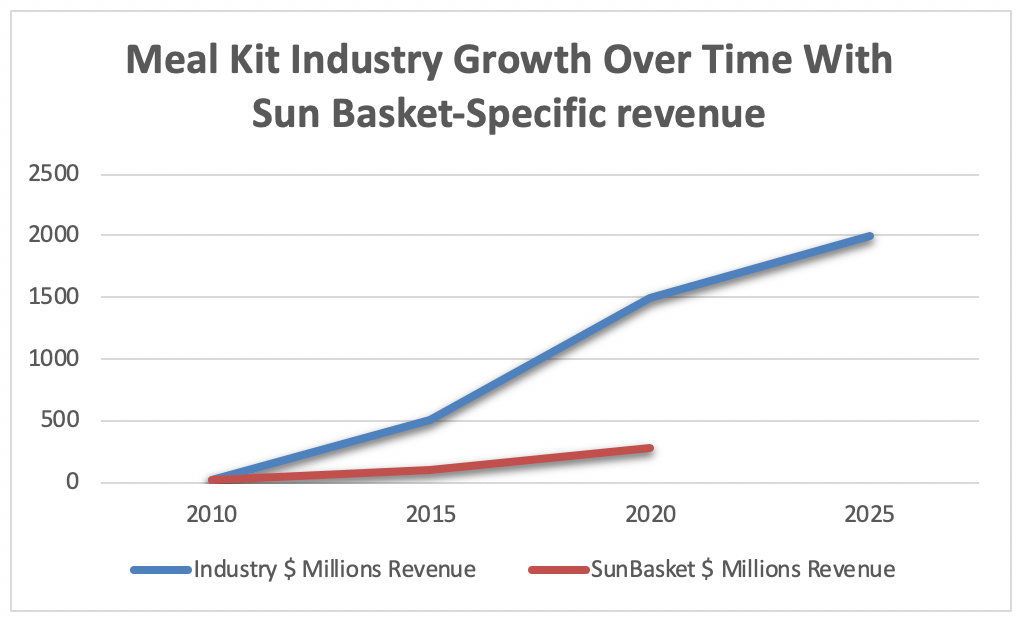
            The meal kit industry as a whole continues to experience massive growth since the early 2000s when it came into existence. Figure 1 shows this growth as well as Sun Basket’s growth as a contender in this space.

Figure 1. Meal kit industry growth over time with Sun Basket-specific revenue.

While Sun Basket has evolved into a leading meal kit provider, the company must keep an eye on emerging companies and how they’re conducting business. With more than 100 competitors and the high turnover of the market, new trends emerge and develop quickly. Therefore, the company must keep on its toes to maintain a strong position.

            Additionally, with the anticipated growth from a successful marketing campaign (like the one detailed in last week’s posts), personnel, operations, cash flow, sales, and risk categories require sustained, close attention. All these areas remain vulnerable to various states of nature in the marketplace, including the political atmosphere, related economic policies, the willingness of consumers to invest in meal kit delivery, brick and mortar grocery stores buying meal kit brands to extend their product offerings, and recent facility decisions that will be explored later in this series.

            While the increased demand in this sector doesn’t appear to be slowing, the industry is quite new and is susceptible to new trends and economic downturns that would likely constrict consumer spending. And with such major brands like Amazon and Walmart entering the meal kit arena, the large pockets and high consumer loyalty celebrated by these entering brands threatens to alter the landscape again.

Post #8 in this series explores a personnel analysis that could contribute to shoring up Sun Basket’s resilience in the meal kit industry.

Reference

Saxe, L. (2019, June 7). Sun Basket To Close Midwest Plant And Focus On Profitability [Blog post]. Retrieved from https://www.forbes.com/sites/lizzysaxe/2019/06/07/sun-basket-to-close-midwest-plant-and-focus-on-profitability/#4c9a99951f74

Sun Basket Post #6: Expansion Recommendation

Considering the cost of international shipping and the regional preferences and tastes of home cooks around the world, the safest option is to remain with a United States market. Additionally, if Sun Basket is interested in marketing itself to be purchased by a brick and mortar grocery story (like the other top-selling meal kit services), then it’s best to remain with a United States market for this purpose as well. A buyer company would likely be turned off by the hassle, expense, and potential legal liability of international shipping, especially with perishables.

Domestic market penetration is definitely the safest and most profitable bet. Additionally, Sun Basket needs to be agile enough to respond to changing market tastes and diet trends. An international footprint would diminish the company’s ability to respond to market demand quickly and efficiently.

This is the last post in this series that makes the case for a Sun Basket promotion focused on Mediterranean food, mass market/YouTube food celebrities, a Facebook marketing campaign, and a social media contest with prizes aimed at expanding the Sun Basket market share.

Sun Basket Post #5: Bayesian Analysis

The percentage of women who could be selected is 60%. The likelihood that a person would enter the contest after being shown a Facebook ad is estimated to be 16%. First, we start with the probability of a woman being selected, which is the same as the base rate, 60%. The probability of it being a man is 1-60%=40%. Tables 1 and 2 show the calculations that reveal the likelihood that a woman shown the ad would enter the contest versus a man.

 Woman entered contestMan entered contest
Woman target9.60%50.40%
Man target33.60%6.40%
Probability of man entering contestProbability of woman entering contest
11%22%

Sun Basket Post #4: Lottery Analysis

Another option for this campaign is a major prize that is even more likely to generate excitement and entice people to create online videos in which they make (and market) Sun Basket and its new selection of celebrity chef-created recipes. A trip to Hawaii could be awarded to a random poster. The company must do its best to ensure a fair, random selection. Here is some guidance on how to do so.

Considering Figure 1, we must keep the relative proportions of audience in mind. If Sun Basket decides to start with a smaller audience, that would definitely save cost. And luckily, Facebook allows the selection of gender and income. But if Facebook didn’t allow for that, the company would need to consider the relative audience size with women taking up 60% of the target total audience and high income taking up 30% of the target total audience.

Post #5 in this series explores a Bayesian analysis.

Sun Basket Post #3: Selected Sampling

This post explores a potential legal concern that a disproportionate number of sampled customers are men. This is particularly troublesome since the target for this promotion is women, since they are the most likely to try Sun Basket offerings.

If a customer is randomly selected from the Facebook marketing audience, the probability that the customer is a woman, P(W), is 944,643/1,574,405, or 0.6. This marginal probability indicates that roughly 60% of all potential customers marketing to on Facebook for this campaign are women.

Let’s say that Sun Basket decides to focus a campaign, at first, on dedicated “Mediterranean Diet Followers” group. Given that the customer is from this specialized group, the probability that the customer is a woman, P (W | M) is 27,491/45,819, or .6. The proportion of women in this specialized group is the same as in the larger population. Luckily, since Facebook provides the option to select gender when targeting ads, Sun Basket need not be concerned about this high probability (40%) of randomly selecting a man to see highly targeted ads aimed at women. Facebook allows ad buyers to select an audience not just based on liked topics, but also based on gender and income level. So it will be easy to rule out men for whom these ads are less likely to work.

Post #4 in this series explores a lottery analysis.

Sun Basket Post #2: Target Customers

The previous post outlines a rationale to embark on a Mediterranean cuisine-inspired internet marketing promotion and contest aimed at strengthening Sun Basket’s position as the leading online-only meal kit brand. The ideal target customers for this promotion/contest are high-earning women, since they are more likely to try the Mediterranean specialty diet and also have the resources to stay on as a customer, since a leading reason people leave meal kit services is the expense.

                      More specifically, there are two niche markets that are ideal: the audience of a mass-market food celebrity who is known to be Mediterranean-cuisine-friendly and a YouTube Mediterranean food chef with his/her own, sizable channel. Both audiences are the perfect source of new customers and the chefs leading those audiences are incentivized to work together to enhance their individual brands. Both audiences can be targeted through a Facebook promotion that would be very affordable because the audiences are so specific. Once you combine the targeted market of high-income women with people who have like pages dedicated to Mediterranean food, Mediterranean chefs, and the specific chefs involved in the promotion, the cost per action will be very low. The only other significant cost is bringing the chefs together for promotional videos and photos, which is relatively inexpensive, since it can be completed quickly and cheaply.

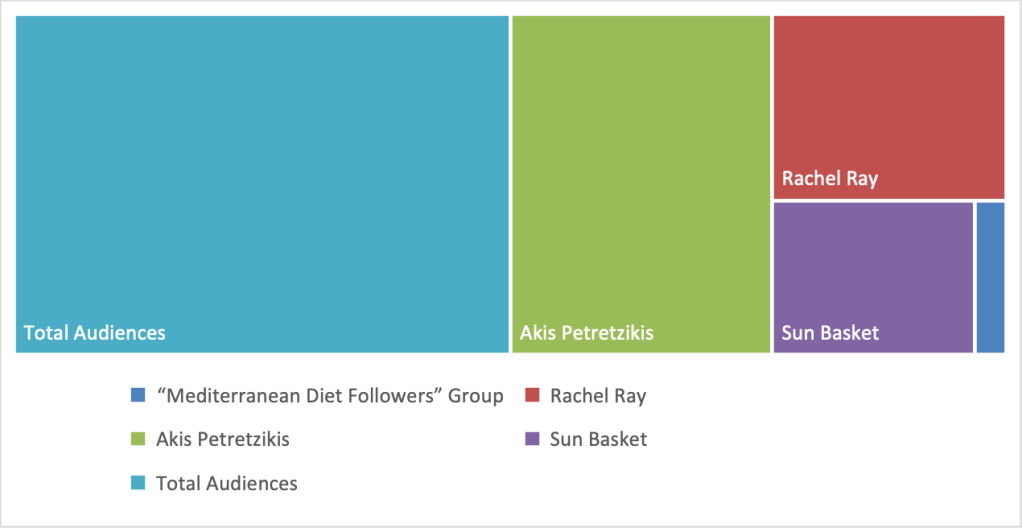
                      Table 1 below shows the highly targeted number of audience members per niche and/or brand.

CategoryFemale Facebook AudienceMale Facebook AudienceTotal Categories
“Mediterranean Diet Followers” Group27,49118,32845,819
Rachel Ray243,940162,627406,567
Akis Petretzikis499,265332,843832,108
Sun Basket173,947115,964289,911
Total Audiences944,643629,7621,574,405

                      Rachel Ray is a highly acclaimed celebrity chef who espouses the virtues of the Mediterranean diet (d’Estries, 2016) and has her own talk show and passionate audience. Akis Petretzikis is a popular YouTube chef with a loyal audience that is already engaged and excited about Mediterranean cuisine. The Sun Basket audience is already engaged with and excited about the brand and can participate in the promotion by exposing Sun Basket recipes to their friends and family. And finally, the overall topic of Mediterranean food on Facebook targets people who are already interested in or committed to this specialty diet.

                      So by the time the chefs sign on to create dedicated recipes for this Sun Basket promotion, there will be an excited audience ready to recreate the recipes and post videos about them for a chance to win one of the following prizes: (1) 50 winners of 2 months of free Sun Basket meals, (2) 10 winners of 6 months of free Sun Basket meals, and (3) 5 winners of 1 year of free Sun Basket meals, including a meet-and-greet meal with the two star chefs.

                      Total cost for this promotional event should not exceed $25,000, including marketing budget, celebrity endorsement payments, prizes, and video/photo shoot. This is a modest cost compared to the exposure on social media for Sun Basket. The YouTube videos created by entrants to the contest will serve as lasting “commercials” for the brand.

                      Post #3 in this series explores a legal dilemma of this promotion.

Reference

d’Estries, M. (2016, March 9). 5 celebrities who have benefited from the Mediterranean diet [Blog post]. Retrieved from https://www.fromthegrapevine.com/health/5-celebrities-who-have-benefited-mediterranean-diet

Sun Basket Post #1: Promotional Event

This week’s blog series tackles the meal kit industry through the lens of Sun Basket. Sun Basket is the fifth largest meal kit company in the United States (Statista, 2019a), which may not sound very impressive. However, in a field of over 100 meal kit companies generating over $1 billion in sales as of 2015 (Scalco, 2018) with the largest brands being bought out by grocery store chains and a high level of churn as online-only companies compete for customers who don’t stay with one company very long, holding the number 5 position is actually quite impressive.

                      Sun Basket has managed to maintain a strong position in this niche food market by focusing its offerings in specialty diet categories, like paleo and the Mediterranean diets. The latter category is a particularly profitable category since the Mediterranean diet is the most competitive diet in the United States among high-income women willing to try a new diet (Statista, 2018b). Therefore, Sun Basket is well-positioned to enhance its market share in the online-only space since so many of its more profitable competitors are shifting focus to the brick and mortar grocery store market.

                      The best way for Sun Basket to leverage its strong position in the industry is to embark on a promotional campaign that highlights its Mediterranean offerings. This series of posts will provide evidence that Sun Basket should partner with a celebrity chef who already likes the Mediterranean diet and a YouTube chef with a dedicated audience who is already excited about Mediterranean food. And through their individual promotional outlets and food events, these personalities can promote a social media contest to their respective audiences that provide winners with anywhere from 3 months to 1 year of Sun Basket free meals.

Post #2 in this series explores the target audience for this promotion more.

References

Statista. (2018a). Market share of the leading meal kit companies in the United States as of February 2018. Retrieved from https://www.statista.com/statistics/654783/market-share-meal-kit-start-ups-united-states-based-on-dollar-spend/

Statista. (2018b). Willingness to try selected diets in the United States as of March 2017, by income. Retrieved from https://www.statista.com/statistics/716049/try-diet-trends-by-income/

Scalco, D. (2018). The History & Future of Meal Kits [Blog post]. Retrieved from https://foodboxhq.com/blog/history-future-of-meal-kits/

Conduent Post #6: Target Area Analysis

Since India is very large, targeting areas that Conduent already has a professional presence and expanding the impact there makes the most sense. Among other benefits, this allows Conduent to take an approach that minimizes risk and leverages already-available resources.

                      Figure 1 in this last post of the Conduent series shows a visual representation of Conduent-accessible Indian city populations by state.

Figure 1. Conduent-Accessible Indian City Population by State

The above image shows population of the cities where Conduent employs professionals who can spearhead farmer initiatives. A surprising insight from this map is the fact that the largest farm sizes (Kochi) comes from one of the smaller populations (Kerala). This goes to show that you can’t judge the impact of farming communities who can benefit from the proposed solutions in previous posts by the size of the population. The actual farm sizes must be investigated further. Additional evidence for this comes from the fact that the mid-sized farm opportunities for ROI come from the largest area, Bengaluru, Karnataka.

Conduent Post #5: Quantitative Analysis

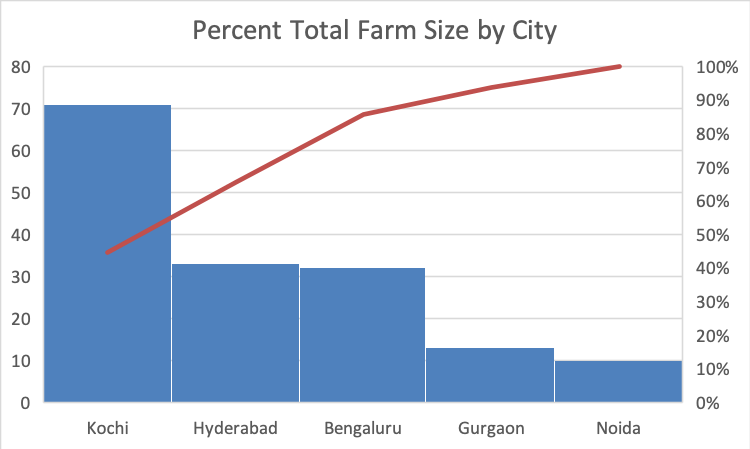
Figure 1 below shows farm size values in descending order by bars, and the cumulative total is represented by the line.

Figure 1. Conduent-accessible farm size pareto chart.

The above pareto chart shows the distribution of farm size in the regions to which Conduent has access. It makes the most sense to pilot a program in the city of Kochi. Since this is the largest percentage of total farms in Conduent-accessible areas, this region would provide the most potential for return on investment. Still, if Conduent is in any insecure about how best to proceed or set up processes to help farmers, the company could choose to pilot a program in the smallest area (Noida) to work out the kinks of the program, develop a system with little risk and less investment, and then roll out a more robust solution to areas like Kochi when the proper infrastructure is in place.

Post #6 in this series explores a target area analysis.